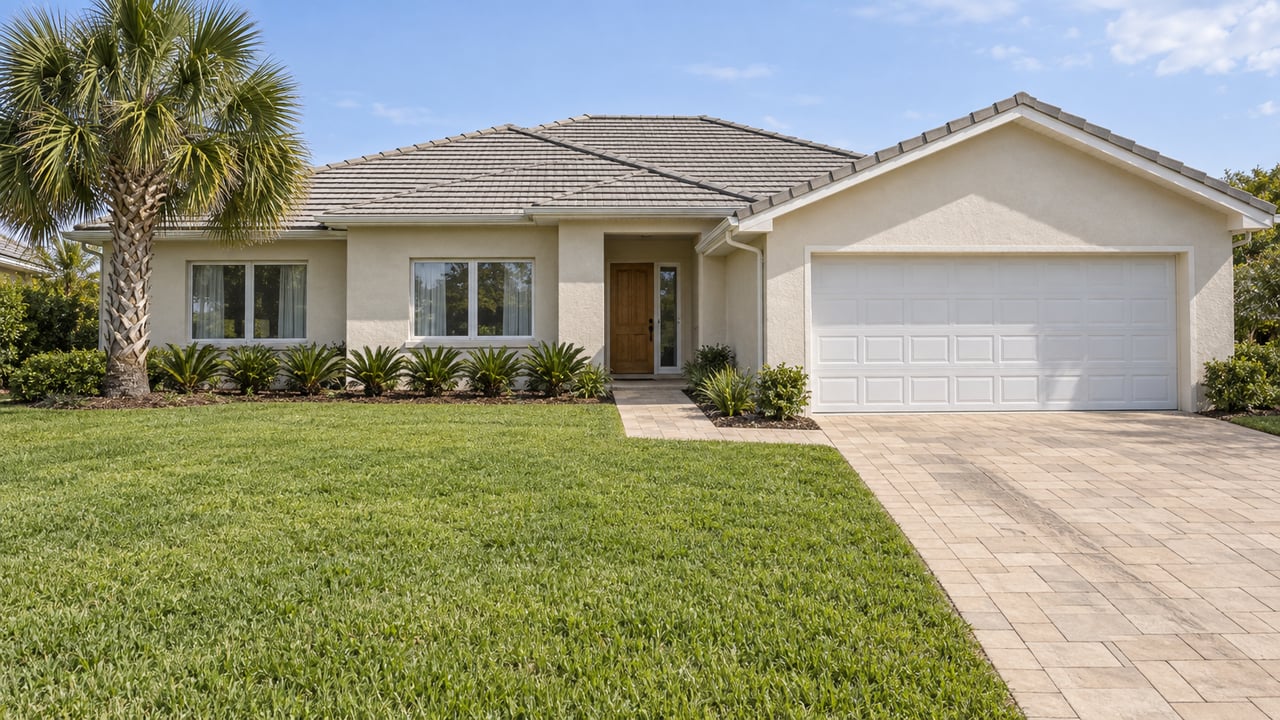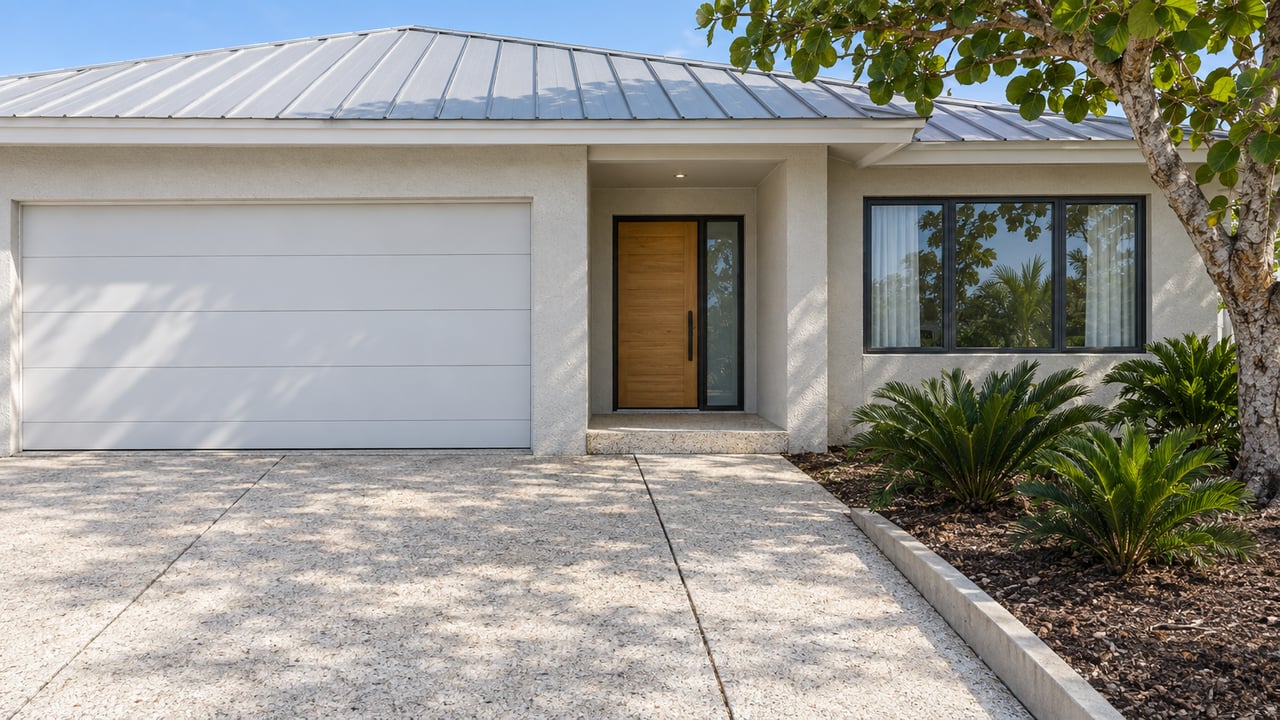
Two listings on the same stretch of Casey Key Road can carry nearly identical asking prices and mean two completely different things once you own them. One is a home. The other is a construction project wearing a temporary roof. The listing sheet won't tell you which is which. The tax record will, buried in a single line most buyers scroll past: year built.
A real share of Casey Key's inventory is original 1950s and 1960s cottages, built long before current flood elevation standards existed. In the math that matters once you go to insure, renovate, or eventually replace that structure, the house itself may already be worth close to nothing. The land under it keeps appreciating anyway, because it sits on one of the more tightly restricted barrier islands in Sarasota County. The number on the sign is doing two jobs at once. It is pricing a home and it is pricing a lot, and in a lot of Casey Key transactions, only one side of the deal has figured out which one it is actually paying for.
The Price-Per-Square-Foot Number Is Asking the Wrong Question
Comparing dollars per square foot across a 1962 cottage and a 2021 custom rebuild two doors down treats them like the same product. They are not. One is a structure with real remaining life, current insurance eligibility, and a monthly cost you can predict. The other is a placeholder, and its per-square-foot number is really a land value calculation wearing a real estate listing as a disguise.
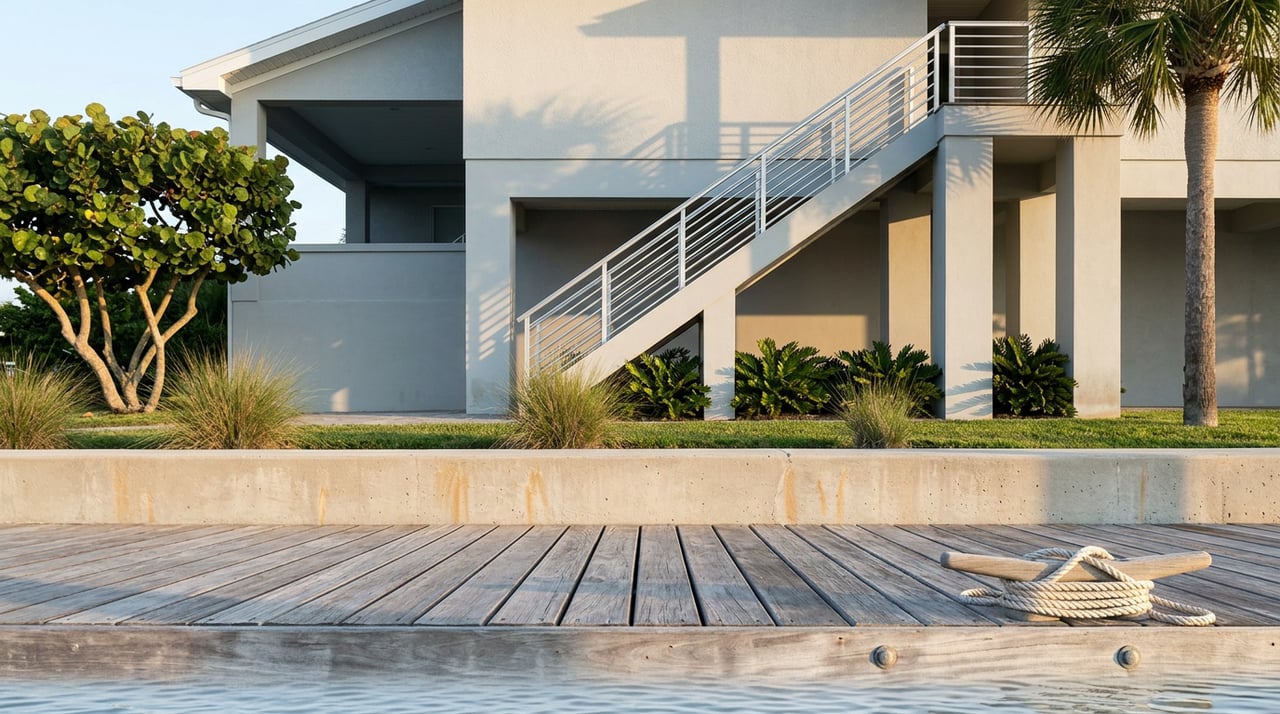
This matters most on the island's defining product: the gulf-to-bay lot. Casey Key narrows enough in places that a gulf-to-bay parcel can include gulf-side beach frontage on one side of the road and bay-side waterfront on the other. A recently built or renovated gulf-to-bay estate commands the top of the market for exactly that reason. An older gulf-to-bay property with a dated structure often trades much closer to what the two waterfronts are worth on their own, discounted for whatever it will cost to demolish and start over. Same configuration, same address type, two entirely different pricing logics depending on when the house was actually built.
On Casey Key you are negotiating two separate assets under one roofline: a home and a lot. Price them separately before anyone prices them together.
The Diligence List That a Standard Inspection Doesn't Cover
A home inspector checks the roof, the HVAC, the electrical panel. On Casey Key, that list is necessary but incomplete. Before you get comfortable with a number, get answers on:
- Whether the existing structure has a current FEMA elevation certificate, and what it would take to bring a future rebuild up to today's standard
- The age and condition of the seawall, particularly on the bay side of a gulf-to-bay lot
- Dock permitting status and the actual water depth at the slip, not just its presence in a photo
- Any riparian-rights issues to investigate at the waterline, regardless of what the previous owner did
- Any history of beach erosion or accretion on the gulf-facing side of the parcel
- Whether the property is served by county sewer or a permitted septic system
An elevation certificate exists specifically to document how a structure sits relative to flood risk, and it feeds directly into both floodplain compliance and your flood insurance premium, according to FEMA's own description of the form. On a barrier island where insurance is one of the largest recurring costs of ownership, that single document is often more predictive of your future carrying cost than the finish level of the kitchen. Get insurance pre-bind quotes on the property as it stands, and on any rebuild scenario you're actually considering, before you waive a financing contingency. Finding out the real premium after you've already committed is the wrong order of operations.
Septic Is a Parcel Question, Not an Island Question
It's tempting to assume that if the house next door is on county sewer, yours is too. On a barrier island, that assumption can be wrong in either direction. Sarasota County's coastal barrier islands, Casey Key included, sit on sandy soils with a high water table, which is exactly the condition that determines whether a lot can support a conventional septic system or needs an engineered alternative, and any new installation requires a site evaluation and permit through the county's Department of Health along with a state-registered contractor, according to local septic permitting guidance for Sarasota County.
Before you write an offer, get the utility status in writing rather than assuming it from the neighborhood. Sarasota County's own utility connections page outlines how connection and capacity fees work for any property tying into county water or sewer, and confirming availability for a specific parcel is a request you can make before you're under contract, not after.
Three Stretches, Three Different Trade-offs
The diligence list above doesn't change depending on where you are on the key. What changes is the scope and cost of what you find.
The north end, reached over the historic Blackburn Point swing bridge into Osprey, carries the island's largest lots and its longest-tenured estates. The Casey Key Fish House and Tiki Bar sits at the foot of the bridge and functions as the social anchor for this end of the island. Bigger lots here generally mean bigger seawalls, bigger docks, and bigger numbers on every item in the diligence list.
The middle stretch is where the key narrows enough that gulf-to-bay single ownership becomes the norm rather than the exception. There's no commercial anchor through here and very little through traffic, which is part of the appeal, but it also means a single owner is responsible for both waterfronts and everything that comes with each of them.
The south end, reached via the Albee Road bridge, sits closest to Nokomis Beach, the only public beach access point on the island. Lots here tend to run smaller, and a higher share of the inventory is original 1960s cottages that haven't been rebuilt, which is exactly why this end typically offers the most approachable entry price on Casey Key. It's also worth checking beach traffic patterns near the public access point if quiet is your top priority.
What This Changes About How You Write the Offer
Once you know which product you're actually buying, the offer itself should change shape.
- Comp the lot on its own when the structure predates current flood standards, rather than pricing the whole parcel off nearby rebuilds
- Build a year-plus construction timeline into your carrying cost if you're effectively buying a teardown, since design and permitting alone typically run several months before any vertical construction starts
- Request insurance pre-bind quotes on both the as-is structure and any rebuild scenario before you waive a financing contingency
- Negotiate the elevation certificate, or the cost of obtaining one, as a line item rather than assuming it exists
- Get septic-versus-sewer status confirmed in writing rather than inferred from the block
None of this makes Casey Key a harder place to buy. It makes it a different kind of purchase than a standard single-family transaction, and buyers who go in pricing the land and the structure as two separate decisions consistently negotiate from a stronger position than buyers who only ever look at the sign out front.
Quick Answers
Does a lower asking price on an older Casey Key cottage always mean a better deal? Not automatically. A lower price on a dated structure can reflect real teardown economics rather than a discount, so the comparison that matters is against comparable land value, not against a renovated home nearby.
If I'm not planning to rebuild right away, do I still need an elevation certificate? It's worth having one on file even if a rebuild isn't imminent, since it factors into your current flood insurance rating and becomes essential the moment you do plan to renovate or replace the structure.
Is a septic system on Casey Key a reason to walk away? No. It's common on the island and manageable with the right contractor and permitting, but it should be confirmed and priced into your budget rather than assumed one way or the other.
Why do gulf-to-bay lots cost more than a gulf-front or bayfront lot alone? A gulf-to-bay parcel combines gulf-side and bay-side waterfront, a configuration unique to the narrower stretches of the key and priced accordingly, especially when the structure on it is recently built.
If you're already looking at a specific address on Casey Key, or trying to figure out which stretch of the island fits your plans, Ryan Miller can walk through the diligence list with you before you write the offer, not after. Browse current Casey Key homes for sale or reach out through the buyer resources page to start with a conversation instead of a guess.
This article is general information, not legal, tax or financial advice. Consult a qualified professional about your situation.